How to Design Your Garden Part 1

Your outside space can be as much of a curse as it is a blessing if you don’t know what to do with it. And even if you do know exactly what you want, how do you go about achieving it? Well, let’s start at the beginning.

Where and How Do You Start to Plan Your Garden?

A few of you smart folks might be thinking that it all depends on what you have in the garden already. You’re sort of right and sort of wrong. In some respects, it really doesn’t matter what you already have there. What matters is your like or dislike of what’s there now and it’s usefulness.

I should explain more about usefulness just in case you are wondering if plants and features need to double up as multifunction devices in their spare time. They don’t. ‘Useful’ refers to what whatever is there now does for the flow and function of the garden – sorry, I’ve slipped into meaningless designer babble. What I mean to say, is everything in the right place?

How Do You Know What Is Right And What Isn’t?

Good question. Glad you asked. Now here’s where we get to the crux of it all. The REALLY important part. Those of you who read my ode to Star Trek (the key to a great garden) will be way ahead – it’s space. That’s the important part, or more correctly, what you do with it.

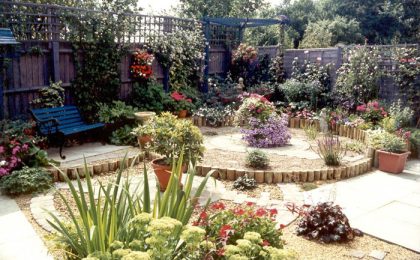
Specifically, it’s how you define the empty’ areas of space (usually lawn, patio or gravel) in your garden. These ‘empty’ areas will dictate how the garden is viewed, how it functions and, most importantly, how good the garden looks. As a general rule, wiggly edged lawn with bits nibbled out here and there don’t look anywhere near as good as big bold shapes like ovals, circles and interlocking rectangular shapes.

Simple but effective shapes

AVOID THIS!

Avoid Wiggly Line Shapes

Here’s How You Plan A Garden:

  1. Work out what you want to have in your garden. Do this by looking at lots of garden pictures. There are some on the garden ideas page of this website.
  2. Measure your garden – if you don’t know how to do that, there just happens to be some video tutorials that show you exactly how to do it. If you can’t be bothered to measure your garden, then read this enlightening article and then decide if that’s quite such a good game plan.
  3. Plot on your base plan all of your existing stuff like trees, shrub borders, patio, paths, that you think you’ll most likely keep. Your base plan will need to be to scale. Scale really isn’t as scary as it sounds and is explained step by step in how to draw your garden to scale video.
  4. Next, pick a shape. Any shape but preferably one you like and preferably an easy shape. Start with a circle or a square and draw that in the centre of your garden.
  5. Keep it simple. How many shapes you use will depend on the size of your garden. To start with, just try one big one taking up approx two-thirds of your garden. Don’t worry if there are things in the way just draw your shape over the top.
  6. Here’s where you decide if things are in the right place. Take a look at the things that are encroaching into the shape you’ve just drawn. Is the shrub border that randomly juts out really working with your newly defined ‘space’ shape? If it isn’t, can you adjust its shape to improve its relationship to the shape you’ve just drawn? If it still doesn’t work, can you take out whatever it is that is encroaching?
  7. Be objective. Try not to get too emotionally attached to the outcome and worry about each plant being right or wrong. If something doesn’t ‘work’, it doesn’t necessarily mean it has to come out. You do however, need to be aware something is ‘wrong’ in order to fix it. So no cheating, be objective. We’ll look at how you get round problems in the next post.

So, that’s where you start. In Part 2 we’ll take a look at how you develop your simple shape into a workable garden design. Oh, and if there is nothing at all in your back garden, then you just do points 1-4, and sit back with a smug look on your face as you have no ‘does it stay, does it go?’ decisions to make.

Don’t Want To Wait To Learn The Next Steps…

If you want to know the FastTrack, step-by-step method that will get you the results you want with your garden quickly and easily, then take a look at the Great Garden Formula Course…


Spring Garden Madness

For me, it’s the silly season. We are working flat out, trying to get gardens done in time for summer. If you’ve joined The Great Garden Challenge forum then you’ll have seen just how many gardens we’ve built in the last few weeks on the ‘work in progress page‘. One recently, more or less finished garden, featured in the forum is the now infamous Spanish Courtyard…

Progress Report – Spanish Courtyard Garden

These are the updated photos of the garden which was featured in the garden design video tutorials. There are still a few plants left to put in but it’s coming together nicely. The water feature is somewhat bigger than I was told it would be, but apparently it looks in proportion when you are in the garden!

How’s The Landscape Man Doing?

Despite being rushed off my feet, I have still found time to watch Channel 4′s Landscape Man. Tonight’s episode was another interesting one. The client’s budget was £250,000.

I’ve been writing about the importance of design when planning a garden and this week I had high hopes because they had a real live designer involved! Yay, at last. Trouble is he didn’t come across as overly effective. He was so busy with his Chelsea Flower Show preparations, that he had to let the client’s get on with it half way through.

They didn’t seem to mind that much but even so, I didn’t feel it was the best advert for designers. I was also left feeling that they’d spent an awful lot of money with not a great deal to show for it. Yes the terrace was nice and the large specimen trees were beautiful but I found myself asking ‘Why?’ a lot throughout the programme.

Screenshot Ch4 Landscape Man - Main terrace

Why?

Putting a modern, ex-Chelsea, show garden in part of the garden, close to that style of house didn’t ever seem like it was going to turn out well…

To me, it just didn’t feel like the design flowed coherently. The pleached hornbeams didn’t seem to do a lot, other than be really out of proportion with the width to height ratio of the path they surrounded. It looked uncomfortable. I did like their metal pergola though, that was very nice.

Screenshot Ch4 Landscape Man - Pleached Hornbeam - tad too high?

I’m a great believer in putting things in the garden for good reasons. They created a ‘stumpery’ (if that’s how you spell it) which is basically dead tree roots with ferns planted in. Ok, interesting idea but why? It didn’t really do anything for the look and feel of the garden.

Screenshot Ch4 Landscape Man - 'Stumpery'

I am looking forward to next week’s show though. If you read the comments on the review I did on the first Landscape Man programme, you’ll have read Ed’s comments. His garden is next in line to be shown in the series and they had to cope with a very overgrown 4 1/2 acre site on the south coast of Guernsey. The garden is lashed by strong coastal winds, so they have had to create a garden that works with harsh conditions.

Everything Should Earn Its Place In Your Garden

If you are in the midst of planning your garden and have lots of creative ideas, sit with them for a little while to make sure they are really right for your garden. Random ideas never work well, it’s really important that features tie in well with everything else in the garden.

What Aspects Of Your Garden Can I Help You With?

I’m planning ahead what I write about on the blog, so I’d like to know what type of garden you have and where you are stuck with it? Let me know if there is something in particular you’d like some advice on. If you don’t, I’ll only keep writing about Landscape Man!

Don't be Fooled by The Landscape Man!

Screenshot Channel 4's new series Landscape Man website

Did you watch it Thursday night? Channel 4′s new series called Landscape Man. It was pitched to be like Grand Designs but about creating  gardens.

The opening episode of this new six part series was jaw dropping. A couple living in Devon had bought a 4-acre site and sunk every penny they had into developing their dream garden to the point of severe financial strain. Keith and Ros worked relentlessly to raise all their own plants in their small nursery as well as plant and tend the garden as it developed. Predictably following the traditional TV formula of will they / won’t they.

You could not fault the couple on passion and commitment but they were as ‘mad as a box of frogs’ as a friend of mine would say (in the nicest of ways). Their garden is their obsession. Keith would talk about his dream with wild staring eyes and a look of fervent determination as he explained his ideas.

Garden creator - Keith Wiley screenshot Ch4 series Landscape Man

Is Happy-Go-Lucky The Best Way?

Keith’s process to landscaping his garden was to climb in his mini-digger and spend entire days digging down into the bowels of the earth to create, what the presenter, Matthews Wilson (aka Landscape Man) would describe as ‘canyons’. He would excavate until it was too dark to do any more, every day until he had totally re-sculptured the flat landscape into a series of intricate mounds and paths which he would then plant up with his beloved flowers.

'Canyons' screenshot Channel 4's new series Landscape Man

Then he started work on his Mexican garden (no, I have no idea why he wanted one in the middle of his plot either) and then his water garden, which he excavated to extraordinary depths. I was torn between being slightly aghast as he took on far too much but willing him to succeed at the same time. Apart from the tried and test television plot line, my gripe about this show is I think it is very misleading and could potentially set gardens back, not forward if it continues in the same vein each week.

Misleading

The show made it look like Keith had an idea and off he went to build it without doing a design. In some ways that was true but if you looked really closely he clearly understood design. As much as his Mexican garden wasn’t to my tastes, the paths lined up with focal points and view lines, he had a thought about how it was structured. He had no garden survey or plan to work from, he did it all in his head. VERY few people can do that. I know I can’t and I’m a professional garden designer.

What About Design?

As much as I found the show to be entertaining, I’m worried that people will think that creating a garden is all about digging holes and planting things. It’s not. Keith, bless him, is a creatively passionate guy, who knows his plants and can visualise how things will look. He didn’t draw a plan because he could see it all in his mind. Honestly, not a good idea. My advice is: PLEASE DON’T TRY THAT AT HOME! Draw out your ideas first. If you are new to this blog and want to find out why design is SO important for your garden read: Why Having a Garden Plan Saves You Time and Money.

What he achieved was impressive, partly because of the sheer scale of his undertaking, and because of his unusual methods. But, just imagine what could have been achieved if he had have come at it with more design focus and less plant obsession. He would have created an absolutely outstanding garden. Passion can only take you so far.

Flower garden screenshot Channel 4's new series Landscape Man

I’m Worried

I have visions of folks up and down the country hiring a mini-digger for the weekend and carving out their ‘dream’ garden. The results of which don’t bear thinking about! The very worst case scenario with any garden is to dig first, thank later. Don’t be fooled into thinking Keith just ‘did’ his garden and it all turned out OK in the end. It didn’t. He planned his garden obsessively, day and night albeit in his head (if anything he over designed it). Be a thinker, not a tinkerer!

Reality?

I do hope that future episodes of Landscape Man talk about how important design is to a successful garden. I’m very much in favour of programmes inspiring people to take action, as long as it’s done in a way that actually helps. The problem with ‘reality’ TV is it is anything but real. The budget of £10,000 is a great example of this. You can’t realistically landscape 4 acres with that amount, it would be a struggle to do 1/4 of an acre for that.

If you missed the show you can catch up with it on the Channel 4 website (the link may not work for those of you outside the UK). And if you want to read more about how landscaping is REALLY done, please download the FREE garden report below which explains the whole process, step by step.

How to Design Your Garden Part 2 – David Stevens Interview

Part two David Stevens interview – choosing the right landscaper and materials

(to listen to the interview in full see episode 7 on iTunes podcast)

Rachel: So once someone has got their design that they’re happy with and they’re ready to call in the landscaper, do you have any advice for the best way to work with a professional contractor? I mean obviously you have to pick someone that is good and that you’ve seen examples of their work, but are there any communication things that people need to get right?

David: I think with any contractor be they inside the house or outside the house whether it’s a landscaper or electrician or whatever, you need to work well and befriend them. What I would say right off the bat if you have any doubts contact the APL that’s the Association of Professional Landscapers because they assess their members as do BALI the British Association of Landscape Industries.

The APL tend to be a bit more garden orientated whereas BALI tend to be a bit larger scale but two do overlap. So if you don’t have access to a good landscape or you don’t know one, look at the APL website they will list everyone in the country and you can pick up someone in your area. So you know they have reached a sufficient standard to be on that list, which was quite important.

Builders will often tell you they can landscape, don’t believe them! Builders are great at going vertically but not at going flat!

Rachel: Yes, I’ve noticed that as well!

David: Some can, but very few. I’m a great believer in selecting people that know their profession backwards. The good landscapers can do hard and soft landscaping and handle the whole contract. But I honestly think communication is the main thing, get your ideas over to them and take good advice from a contractor. Over the years, I’ve learnt a huge amount from contractors, from how to lay paving to how things work. Contractors do this all the time and know their advice very often is sound and good. So don’t be afraid of listening to their advice, it’s a good thing to do..

Rachel: Yes, it’s knowing whether the advice is to change something because it makes it easier to build and quicker or whether they are genuinely advising you, experience helps, but nine times out of ten they are doing their best to help you. The ones cutting corners tend not to discuss it! They just say I moved it over here because it was easier, and I can see that it might have been easier but it doesn’t look good!

David: And the other thing is budgets. So many people unfortunately underestimate the amount of costs involved in building a garden. It can be up to 80% in hard landscaping, the walling, the paving, that’s really where the lion share of the budget is going to go. Plants and planting are relatively inexpensive compared to hard landscaping.

Rachel: Yes people are often under the illusion that garden is just grass and plants and that’s quite cheap. And think that it is easy to put a patio down. And I think there’s more skill involved in hard landscaping and there is in fitting a kitchen for example. There are so many skills a good landscaper has to have.

David: Just things like getting the fall correct with the drainage, people forget about the damp proof course and all these basic things that should just be second nature and a good landscaper will understand all of that and lay on proper footings and foundations and all that kind of stuff.

One thing I would just point out if you are a designer just starting out, unfortunately more and more litigation is coming in, so if in any doubt, if there is a retaining wall or structure that you’re not sure about get it checked out by a structural engineer or an architect. I’ve seen some dreadful things happen over the years so it’s best to have that peace of mind and get that expertise.

Rachel: Definitely, I’ve never specified how anything should be built on a plan, because that’s not my area of expertise. Different soils will need different depths of footing, so I always make sure that the landscape professional is the one who makes a judgement call on what needs to be done, because they do have the experience and expertise to know.

Have you noticed with the current economic environment any design shifts that have evolved because of it?

David: Oh yes people are far more of veggie conscious and growing far more vegetables. And environmentally are increasingly looking at growing more in the garden and attract more wildlife. I think the wildflower meadow seems to have run its course which is good, as it was never that easy to do properly anyway, but I think people have really become conscious of Grow your own.

And all my customers that’s one thing they stipulate in the garden, even if it’s a tiny garden they want to grow herbs for the kitchen or whatever. And very often the bigger the garden, the more they want to do. Which does make sense, and it’s a cliche but when it’s homegrown it does taste better out the garden.

Rachel: One thing that I’ve noticed, which is great, is that people are more environmentally conscious and want to create an ecosystem garden and attract wildlife into their garden. One thing I always struggle with is it which materials are environmentally friendly to use. Concrete is such a big pollutant and natural stone travels such a distance and comes from countries where child labour is used, what’s your view, how do you deal with those types of issues?

David: I think you need to be aware of them and I think things like Indian sandstone are now becoming a lot more controlled. The majority of the companies that import them make sure that no child labour is used and that it is quarried properly. And the same thing with FSC Timber, always make sure you buy timber from a renewable source and it will have that sticker on the timber. Most of the big suppliers will make sure their timber sourced in that way which is important.

And also people need to become much more aware of what we call greywater, that’s the run-off of rainwater from roves and we can store it in tanks or simple water butts so that you are recycling your water and you’re not making a drain, literally, on the natural resources.

So then you need to be aware of all those things, you need to check them out. You need to know the material is that you are using, and you need to know where they are from and the social implications caused from using them.

Rachel: I say to people that if you can get stone from a quarry down the road, even though it will cost more it’s better to use it. We are certainly trying to recycle materials a lot more, my landscape contractor is very environmentally conscious and he made the good point that both of us recycle and do everything we can at home and the moment we get to work we start using concrete! So we’re finding ways to recycle as much as we can and not put things into landfill.

David : Yes it makes absolute sense to recycle the paving instead of putting into landfill. You can often put materials to other uses.

Rachel: The last thing I’d like to ask you is you’ve written some amazing books, 22 my research tells me, which is phenomenal! For homeowners just starting out with their gardens which one of your books would you recommend?

David: I think the best one is a book called The Garden Book which I did with Urshala Buckhan it’s a Conran Octopus one and she is a brilliant horticulturalist, we get on very well and I did the design side and she did the horticultural side and it’s a super book. It’s a big book but it takes you right through the design, construction and planting process.

Rachel: Actually that’s one I really love as a designer. So next question is for new designers which book would you recommend?

David: Backyard Blueprints. It’s a neat book with a lot of practicality about building gardens. I like practical landscaping, I don’t trust garden designers with clean Wellington boots, do you know what I mean!

Rachel: Yes I do!

David: Practicality is important.

Rachel: Yes you’ve got to be able to build the thing otherwise there’s just no point!

David: Absolutely.

Rachel: Well, David thank you so much for taking the time to talk to me today, I know that it will help so many people.

David: Pleasure!

Here are links to the books we discussed in the interview (with Amazon affiliate)

Backyard Blueprints

Garden Book: Planning, Planting and Design


Improve Your Garden Now – Here's How…

The Easter weekend tends to be a time when a lot of people start to think about their garden. If the weather is nice, every garden centre across the land will be jammed packed with people frantically purchasing plants for their garden.

The serious folks are lining up at 9am on Good Friday and are probably back on the Saturday for yet more plants. And by Monday the ‘Day-trippers’ are out in force, milling about being seduced by impulse buys.

Which One Are You?

The serious shopper determined to get your garden finished by the end of the Bank Holiday weekend or the impulse buyer? It doesn’t actually matter which category you fall into, either one is equally valid. What matters is what you spend your hard earned cash on. You might have a list of things you think you need and still buy the wrong things. And equally, you may be seduced by an impulse buy and strike lucky with a great purchase. Who knows!

A Game of Chance

When you consider what cautious folks most of us are in day to day life, it’s amazing how all that caution goes out the window when it comes to our gardens. Without really knowing what we are doing, we rush off to the nearest garden centre, spend a big chunk of cash on plants, statues and anything else that catches out eye, come home, strategically scatter out new purchases around and then expect the magic of nature to do the rest…. sound familiar? Come on, we’ve all done it at one point or another.

Trouble is, that method doesn’t work particularly well. It is a game of chance doing it that way. If you’ve loads of surplus cash lying around, taking a gamble can be fun. If you haven’t, nothing is more disappointing than spending time, money and effort and not achieving the results you really want.

If Only You Knew!

Most people don’t fully understand garden design. They have a rough idea of what is involved but not really. People assume I arrange plants for a living. In part that is true, but it is only a small part of the job. A truly great garden is so much more than the plants it contains.

Want to Stack the Odds In Your Favour?

To make life easier for you, I’ve written a FREE garden guide on how best to go about landscaping your garden. The 7 Steps To A Great Garden is a step-by-step road map that explains everything you need to know from how to do the garden yourself or how to pick the best landscape professional to work with. See info at the end on how to download your FREE copy.

So if you want to make sure you make your garden great this Easter, get your FREE garden road map, The 7 Steps To A Great Garden.

The Key To A Great Garden Is…

Star Trek Ultimate Edition by *michkelleher on deviantART

The Importance of Space

Space, they tell us is the final frontier. I disagree, at least when it comes to garden design. Space is the FIRST frontier.

When it comes to gardens, people are passionate about plants; they are passionate about garden features. Unfortunately those things are not what make a garden great. They certainly add to a garden’s greatness but they are not the key to it.

What you should be passionate about is space and the use of it. Before you shrug your shoulders, say “hmph” and go back to Twitter, let me tell you why space is THE most important thing you can think about in your garden.

A Whole Lot Of Nothing

The areas of empty space in your garden, like lawn and patios, are exceptionally important to shape correctly to have a great garden. These areas of empty space dictate how the garden is viewed, used and looks.

The Most Common Mistake

Most folks shape the flower borders first and then the lawn is whatever shape is left. Whilst that makes sense logically, practically it’s not the best way to do it. If you shape the empty areas of space first, your main view is then perfectly shaped to lead the eye where you want it to go to make the garden look larger, more interesting and exciting. Rather than a nibbled into with random, incoherent shapes type of lawn.

Shape the lawn and patio first

Resist the Temptation of Things

We all love stuff. We are obsessed with things. Plants and features are wonderful things, so it’s very easy to be seduced by them. Shaping empty space is petty boring in the grand scheme of things but its use is one of those understated givens in a good design.

To give you an example, you may think that the words you see on a page are what makes an article. Whilst that would be a pretty good assumption, there is something as important as the words. Yesyouguesseditspace!Withoutspacethewordsareverydifficulttoreead!

When it comes to gardens, correctly shaping space is even more important to get right than the space between these words.

Your Mission: Live long and create great gardens!

Exciting News!

Finally, The Great Garden Formula Home study course is now available. For a short time it will be discounted in order to get testimonials for the website. Check it out here: http://www.courses.successfulgardendesign.com/

Is your garden a 'Sagger'?

A while ago we looked at why it is so important you plan your garden before it’s built. But there is one thing that is crucial to get right before you even get to the planning stage. The dreaded garden survey!

Why do so many people avoid this part? Well tapemeasureaphobia is usually to blame for that. But there is another factor. Let’s be honest, striding round your garden, getting tangled up with a tape measure and genuinely looking like you’ve been dragged through a hedge backwards is not one of the most fun things you could do with your free time. BUT it’s really important you get your garden plan to the right size and scale before you design it.

Here’s Why (and an exclusive on how the fashion trend ‘sagging’ actually started!)

I want you to imagine you’ve never bought clothes before and you go into a department store to get an outfit. You see some clothes you like, grab enough for your outfit, pay for it and leave.

When you get home, you try on the top you’ve purchased. It’s a bit big but it more or less fits, not wonderfully, but it will do. Then you come to try on the trousers and find that you’ve inadvertently got them with legs far too short for your legs.

You now have a problem to solve. You’ve got this far and are determined you can get things to work – there is no way you are going to measure yourself and go back to the shop and admit you’ve got the size all wrong; you’re an inventive and determined person and you WILL get this to work out if it’s the last thing you do!

You’re Smart, You Can Find a Way to Get This to Work, Right?

So the legs of your trousers are far too short – you don’t have any spare material so the only solution you can see is to pull the trousers down lower, so they are sagging and the bad fit should more or less be covered up by the slightly big top. Can you picture just how bad that would look (and feel)? Other than quite a current fashion trend, does this sound like complete craziness to you? It will, if you are over the age of 25!

What on Earth Does This Have to do With Gardens?

Now back to gardens, the exact same crazy thing can happen. And very easily, if you haven’t measured your garden correctly or at all. You’ve spent time working out your design on paper, you’re happy it looks lovely, off you go to buy everything you need. Then, when you come to build it, nothing quite fits or looks right – the area is either bigger, smaller or a completely different shape to what you thought it was…. and you’ve got all this stuff you’ve had trucked to your home. Are you going to face the embarrassment of going back to the builder’s merchant and being called ‘Luv’, ‘Dear’ or ‘Mate’ again and admit you’ve botched things up?! I’m guessing, not.

Just in the same way the poorly fitting trousers didn’t produce quite the look you were planning for your outfit, having to totally change your garden design to make everything fit also has equally disastrous consequences. Nothing fits as it should and making adjustments makes the proportion and flow not work well. It won’t ever look as good as it should, or, worse, it’ll look awful.

The mistake with the clothes is pretty minor in the scheme of things – you don’t have to wear them EVERY day, they are relatively cheap to replace and very easy to rectify. Unlike the time and money you spent on the garden. That’s not nearly so easy to get right once it’s gone wrong. And if you’ve spent a lot of time and money on it,  you may be looking at it for a VERY long time…

Moral of The Story

Don’t make the mistakes of a teenager and dress your garden like one! Measure your back yard before you design it.

Spending time getting to know your outside space intimately with a tape measure doesn’t seem quite so bad now does it? If you have no idea how to measure your back garden then head on over to the free garden video tutorials on measuring and how to draw up your plan to scale.


Inspirational Gardens part 2 (sort of!)

Cambridge University Botanic Garden

Best laid plans

Don’t you just love it when you have a really good idea, one that will undoubtedly be helpful and inspiring for people but there’s a small technical glitch that throws a spanner in the works? Well, I’ve discovered a bit of a glitch with this particular monthly feature on inspirational gardens and the people behind them.

The first one I choose, the wonderful Veddw garden in South Wales, was an easy choice; great garden, lots of accessible photographs and it proved to be very popular. During my interview with Anne Wareham, I asked her to pick the next Inspirational Garden. She’s picked an absolute cracker, trouble is this garden isn’t so accessible. It’s a private garden, one that is open to viewing by arrangement. There is no website, very few photographs online and I’ve not had any luck getting hold of the owner when I’ve phoned! With Veddw, there were so many photographs, I felt like I’d been there. Not the case with this garden.

Gardening flesh

I’ve seen enough photographs to be thoroughly intrigued by Anne’s choice but not enough pictures that make me feel I could do it justice writing about it. So there’s only one thing for it – I need to go and visit it and see for myself how a garden has been constructed using just two main plants. There are other plants in the garden but two plants dominate the design.

Not that I’m a complete tease or anything, but I’m not going to reveal which garden Anne chose just yet. I will give you a clue, though; it’s in Swansea. As soon as I’ve visited it, I will tell you all about it.

Something a little closer to home

Grass Maze - Cambridge Botanic Garden

Instead, I’m going to show you a garden that’s close to my heart. Having moved to Cambridge last year, I do love to hang out at the Botanic garden. The photograph above shows part of their dry garden. Although Cambridge has lots of open green spaces (one of the many reasons I love living here) my favourite is definitely the botanic garden. On sunny afternoons, when I’m finished designing for the day, I pop over with my camera, treat my self to a nice big slice of cake and then wander around the garden taking photos for my plant design album.

Cambridge University Botanic Garden, like most botanic gardens, it is more plant focused than design orientated, there are some areas that have been well-designed and a lot of thought has gone into the planting schemes. The Botanic garden is situated on a 40 acre site, right in the city centre, though it doesn’t feel that large. It’s a great place to visit if you are looking for plants and trees to inspire you for your garden. I particularly love how they use grasses in the herbaceous borders. There is a nice mix of traditional and modern influences throughout the garden.

Stipa calamagrostis - Cambridge botanic garden

Where do you suggest?

I’d like to visit lots of great gardens this year. I’m looking forward to doing this. I used to visit gardens all the time when I first qualified, so I’ve done the usual ones like Sissinghurst, Hestercombe and Hidcote. Veddw, of course, is already on my list for the summer. I’d also love to visit less well known gardens. What other suggestions do you have? Do email me or leave a comment if you have a suggestion. Doesn’t just need to be UK gardens; I’m happy to go further afield in search of glorious gardens.

A view of Cambridge

For those that aren’t familiar with Cambridge here are some of my favourite views.

'The Backs' Cambridge

King's College Cambridge

Roll on summer…

Fancy a punt?

Fancy a punt?

Copyright protected by Digiprove © 2010

BIG ideas for roof gardens [part 2]

In last week’s blog post we looked at how to tackle a tiny courtyard garden for reader Rachel Scott. This week we are going to look at the second part of Rachel’s question – what to do with a small roof terrace. Plus look out for the special announcement at the bottom of the page…

Most of the design tips below will also be applicable for small town gardens and walled courtyard gardens, not just roof terraces.

Photograph courtesy of Simon Leonard

Well, the first thing you need to think about with any roof terrace is the structural integrity. If you require permission to turn the space into a garden in the first place. We’ll assume all is fine on that front, in this instance.

How much weight can it hold?

The answer to that question dictates where you start. If there are no weight issues, you can use almost any building materials (it is sensible not to use excessively heavy materials) and build retaining walls with built in seats and planters. If there are weight concerns, then only place planters and other heavier objects in areas that are load bearing (usually the outer edges). Use lightweight materials. But before you do anything call out a structural engineer to advise you on what you can and can’t do.

How to use the space

As much I have have grown to hate the expression ‘outside room’, this is how you should think of a roof garden. Thinking of it as a room will help you utilise the space properly. In a tiny space like this one (3m x 2m), Rachel’s next job, once she has worked out what she can do weight wise, is to work out what space she needs to function in.

Like planning any other type of landscaped garden, you need to decide the use of the area. Are you going to have a seating area? How are you going to access it? Where is the best location to be in, or to avoid the sun? Once you’ve worked out what you want to do, you are halfway there. If you have a chair and table, set them up and see how much space you have left. If it’s not much, would it be better to build a planter with a seat built in to save on space?

You need to find the right balance between function and looks. Areas need a certain amount of empty space so that they don’t feel cluttered. This is critical to your success. ‘Less is more’, as they say (I vow one day to come up with an alternative phrase).

Use the walls

In any garden, the boundary can be used to your advantage. But in a tiny roof space, you must make the walls your best friend. If you have an interesting exterior wall, one that indents, is it possible to render and paint sections? Perhaps certain parts lend themselves to some outdoor art? Is it possible to attach a canopy on the wall to pull across on inclement weather days?

Get arty

Going back to the ‘outdoor room’ theme, dress the walls like you would for an interior but with about half to a third less stuff. If you are a clutter monkey, make that an two-thirds less! A carefuly positioned ornament or some candles on an exterior shelf blends the inside and outside spaces. Exterior art can be used effectively too. A fairly inexpensive way to create some outdoor art if you aren’t an artist is to get some Ikea canvases and paint them with exterior or yacht varnish, front and back, two to three coats. They won’t last forever but will add that finishing touch to your roof garden.

As well as thinking about how to use every bit of space from the floor to the walls. Also think about the views beyond. Frame the best parts of the view, disguise and hide the parts that don’t look good. If all the views are wonderful, you may still need a windbreak to make the sitting areas more comfortable. Screens like the one shown in the photo above work well or dense planting can sometimes be enough if the area is not overexposed.

Getting the right plants

Of course no garden would be truly complete without the plants. Think very carefully about what you put in; will it survive windier and colder conditions (if on an exposed terrace), for example? Pick plants that look good all year round and can cope with some neglect. By neglect I don’t mean to cast aspersions on your gardening skills or commitment. It’s just a fact that a plant grown in a pot suffers much quicker than one planted in the ground with more soil to support it.

Hopefully that has given Rachel some ideas for her Sydney roof terrace and you as well for your garden.

How to Create Your Dream Garden…

If you’ve ever felt frustrated at trying to create a wonderful looking garden and want to know the secret to it then take a look at the Great Garden Formula Course. Grab your copy now at the great introductory price. Click image or link below for further details.

http://www.courses.successfulgardendesign.com/create-a-great-garden/

Future blog posts

So what areas of your garden/landscape are you struggling with? If you’d like some advice, leave a comment in the box below and you may just see a blog post written about it in the near future!


What makes a great garden?

What makes for good garden design? It’s such a subjective topic…although one should not ignore strong technical elements. Consumer garden needs are always changing which means that the ‘design sands are always shifting’. Here are just a few thoughts on what is needed to make a good garden great….writes guest blogger Philip Voice.

I am not too sure that any single aspect of a garden’s design makes any particular garden great.

Sure, there are elements that a garden designer should be keen to retain, manipulate or work with when fashioning any space to suit the needs of the client, but nothing should ever be so rigid as to hold back on expression. An experienced garden designer will use instinct and experience: experienced design development, is not even a conscious effort.

Working with your natural landscape

The existing lie of the land must always be a strong consideration – especially if the garden is large enough to retain natural slopes and contours: aspect and light must be used and I think that the very best of garden design occurs when the designer’s instinct comes before contrivance – the latter is only relied on when other aspects of the design won’t fall into place naturally.

A garden designer’s initial thoughts must be simple: access to parts of the garden have to be created using a desire line mentality. If a desire line is not feasible, creating a physical barrier so as not to create blockage, but gently lead the garden user or wanderer is the next consideration – creating rigid angles or obstacles only serve to annoy will cause upset.

Creative collaboration

Maybe the very best of garden designers can pour emotion into the space that they are designing? Many designers will ask a client for a list of their requirements…others can introduce elements based on what life is being lived around the environment the garden is to be created in.

Philip Voice is a life long professional gardener turned blogger and the author of Landscape Juice and founder of the professional industry site, the Landscape Juice Network. I hope you’ll take a look at his wonderful websites and forum which celebrated getting 1000 members last week!

If you are wondering why Philip didn’t mention plants making a garden great, then this blog post on cake will explain why!

What are your thoughts on what makes a garden great?